
Utah Bench Warrants Explained
Utah courts use two labels for the order that follows a missed court date: bench warrant and warrant for failure to appear. The naming is consistent across the state. So is the idea behind it. The order can arise in a traffic, infraction, ordinance, misdemeanor, or felony case whenever the Utah court and the governing rule allow it. It is not a probable-cause arrest warrant. For a quick first check, the free Utah Statewide Warrants search is the natural place to start. Still, the Utah court that issued the order controls the case, the appearance instructions, and any recall. Many failure-to-appear matters in Utah start in a county or municipal Justice Court, which handles local traffic, ordinance, infraction, and class B or C misdemeanor cases. Felonies and larger cases go to Utah District Court. Juvenile Court runs a separate confidential record path. A Utah citation or notice tells you more than a home address does, because the case type and court are printed right on it. Start there.
Utah Calls an FTA Warrant a Bench Warrant
Utah has two names for it. A missed-appearance order is a bench warrant or an FTA warrant, and "capias pro fine" is not the general Utah label for one. Names matter here. Utah anchors the process to a court case rather than a generic state list. The court decides the rest. It determines whether the nonappearance requires a warrant, whether payment is allowed, and whether a motion or new hearing is needed.
- FTA
- Failure to appear or respond when a court requires it.
- Bench warrant
- A court order commonly issued after a missed appearance or failure to comply.
- SFTA
- Utah DLD's code for a license suspension related to failure to appear or comply; it is not itself a warrant.
- Recall
- An action by the issuing Utah court withdrawing its warrant.
A Utah court clerk can explain the exact code or case entry that applies to your situation. One county's wording is not every court's rule.
How Utah Bench Warrants Are Issued
Utah law lets a court issue a bench warrant when a person fails to appear or fails to pay a traffic fine as permitted. Utah Code §77-7-19 covers the court process for specified traffic-citation failures. Not every overdue ticket becomes a warrant. The rule is not automatic. A judge applies it case by case. The court looks first at whether the citation required an appearance or allowed another response. Once entered, the order may travel from CORIS or a Justice Court's Warrant Management System into UCJIS. BCI administers and audits the Utah statewide file. Law enforcement updates service status. Neither role hands those offices the case itself. The issuing Utah court still maintains the case, and a warrant can sit in more than one system without giving every office the same authority over it.
A Utah Justice Court Missed Date Can Trigger a Warrant
Picture a driver in Utah who gets a traffic citation and lets the response date slip by. What happens next depends on the ticket itself. Did it demand a court appearance, or did it allow payment or some other response? If an appearance was required, the Justice Court may take up a bench warrant under its authority. A missed date alone proves no such order exists, though. Ask the Utah Justice Court on the citation whether the case is still open. Ordinance cases and lower-level criminal matters in a Utah municipal Justice Court follow the same path. Remember that a county court and a city court are separate issuers, even for a ticket written in the same county. The Utah statewide search offers a useful first look. Still, only the Utah court that handled the citation can confirm an active warrant and say what action satisfies it.
Note: In Utah, missing a traffic date can lead to a court warrant, but a late ticket is not automatically a warrant in every case.
Utah's Rule 4-701 Has a Specific 14/40-Day Citation Process
Utah UCJA Rule 4-701 lays out a timeline for certain delinquent citations where a Utah court appearance is not required. Day 14 is the first marker. The clerk may add $50 and mail a delinquency notice then. Day 40 is the second. Another $75 and an FTA warrant can follow. Conditions apply, including a juvenile flag. This is not a general fee table or a universal timetable for every ticket. The distinction matters when a citation allows payment in lieu of appearing. Confirm the Utah court's actual track before sending money. An outstanding warrant or a required hearing may still need separate attention, and the Utah Justice Court handling the citation can say whether the sequence applies to that case.
Note: Utah Rule 4-701 applies to specified nonappearance-required citations and is not a standard timetable for every unpaid ticket.
Bench and Arrest Warrants Compared
Both orders let law enforcement act. The Utah case path behind each one differs, though. A bench warrant follows a court event such as a missed required appearance or a failure to comply. An arrest warrant in a new matter follows the applicable probable-cause and issuance process instead. The court record shows which order exists, and an FTA entry should not be mistaken for a new charge. The Utah arrest-warrant search page covers the rest.
| Feature | Bench Warrant | Arrest Warrant |
|---|---|---|
| Trigger | Missed appearance or another court-order failure, as permitted in the case | Probable cause and the applicable legal basis for arrest |
| Issuing process | Utah court acts on a failure in its own case | Judge or magistrate issues the warrant under the arrest-warrant rules |
| Case context | Usually an existing case with an unmet court obligation | Often a new or pending criminal matter |
| Resolution | Issuing court determines appearance, payment, motion, or recall | Issuing court sets appearance and release requirements |
Many Utah Bench Warrants Sit in Municipal Justice Court
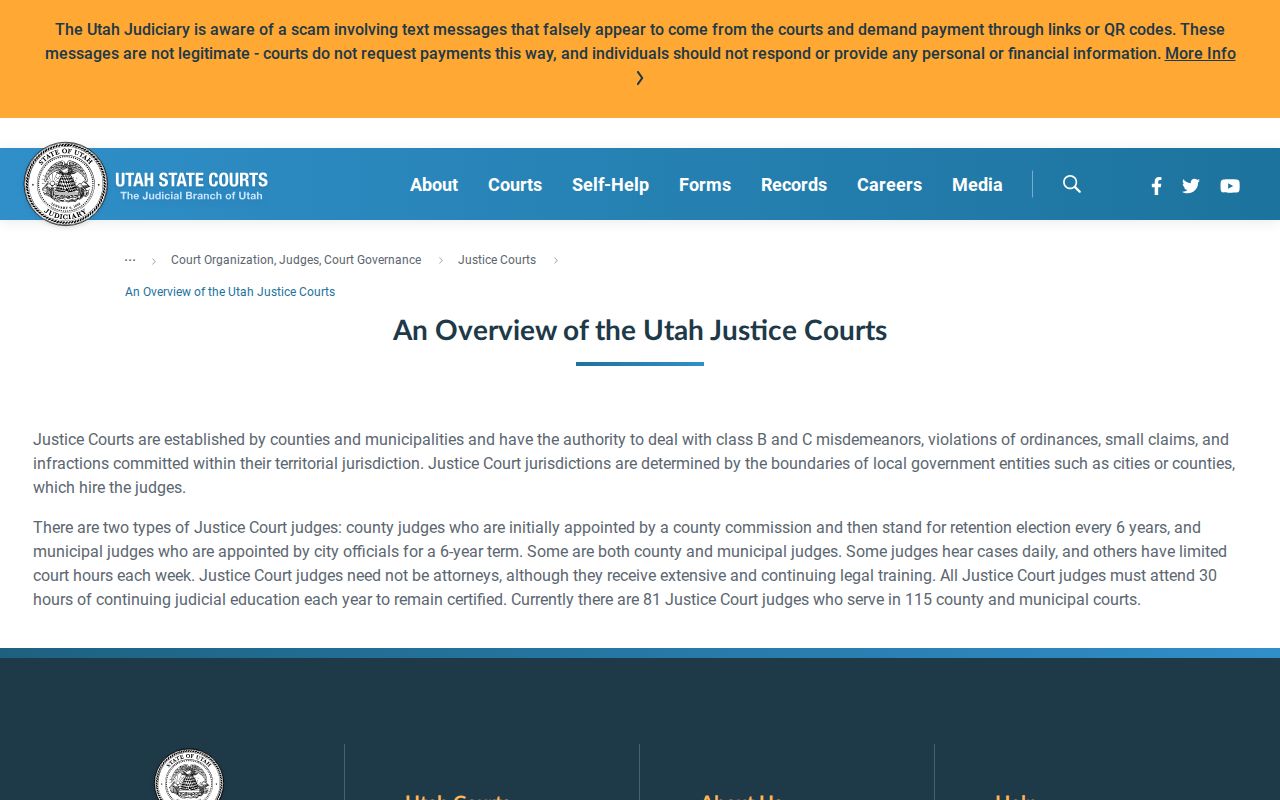
Utah sorts its courts by level. That split decides where a Utah bench warrant sits. Utah District Courts are the general-jurisdiction trial courts across eight judicial districts. County and municipal Justice Courts take many traffic, infraction, local-ordinance, and class B or C misdemeanor cases. Utah Courts reports 115 Justice Courts and 81 judges. Juvenile matters go to Utah Juvenile Court, with restricted case records. A statewide name check cannot replace the issuing clerk. The Utah Courts overview describes the statewide system of Utah District Courts, county Justice Courts, and municipal Justice Courts.
Use the Utah court printed on the citation or notice. That name points to the right jurisdiction. The Utah court directory and the county hub route you to local channels, while the state overview explains the tiers.
Note: Utah's court counts describe the statewide structure, not the number of warrants in any court or the likelihood of an order.
Resolving a Utah Bench Warrant
No single statewide recall form, uniform FTA bond, or walk-in protocol covers every Utah court. Start with the issuing Utah court. Ask what this case needs. Payment, a new date, a motion, an appearance, surrender, or a bond may resolve it. The Utah clerk can explain the steps. The judge controls recall, so keep a receipt or written order and confirm the Utah court recorded the action.
- Identify the Utah court on the citation, notice, or BCI result; if none appears, contact the court that handled the underlying case.
- Ask whether the Utah warrant is active and whether the court requires a hearing, motion, payment, surrender, or another step.
- Consult an attorney about a motion to recall or quash when the case is contested or the consequences are serious.
- Confirm the right place and process with the Utah court or sheriff before appearing, and ask what identification or paperwork to bring.
- Resolve the underlying case and keep the docket, receipt, or court order; ask whether a new date or release condition remains.
Caution: Do not assume an old Utah bench warrant expired or that payment alone recalled it; ask the issuing court for the current order and case requirements.
Utah DLD's SFTA license status is a separate record. It can follow an FTA. Obtain court proof that the FTA is cleared, then follow DLD's reinstatement steps, including the published $40-per-citation fee.
A Utah Promise-to-Appear Is Not a Recall Until Court Appearance
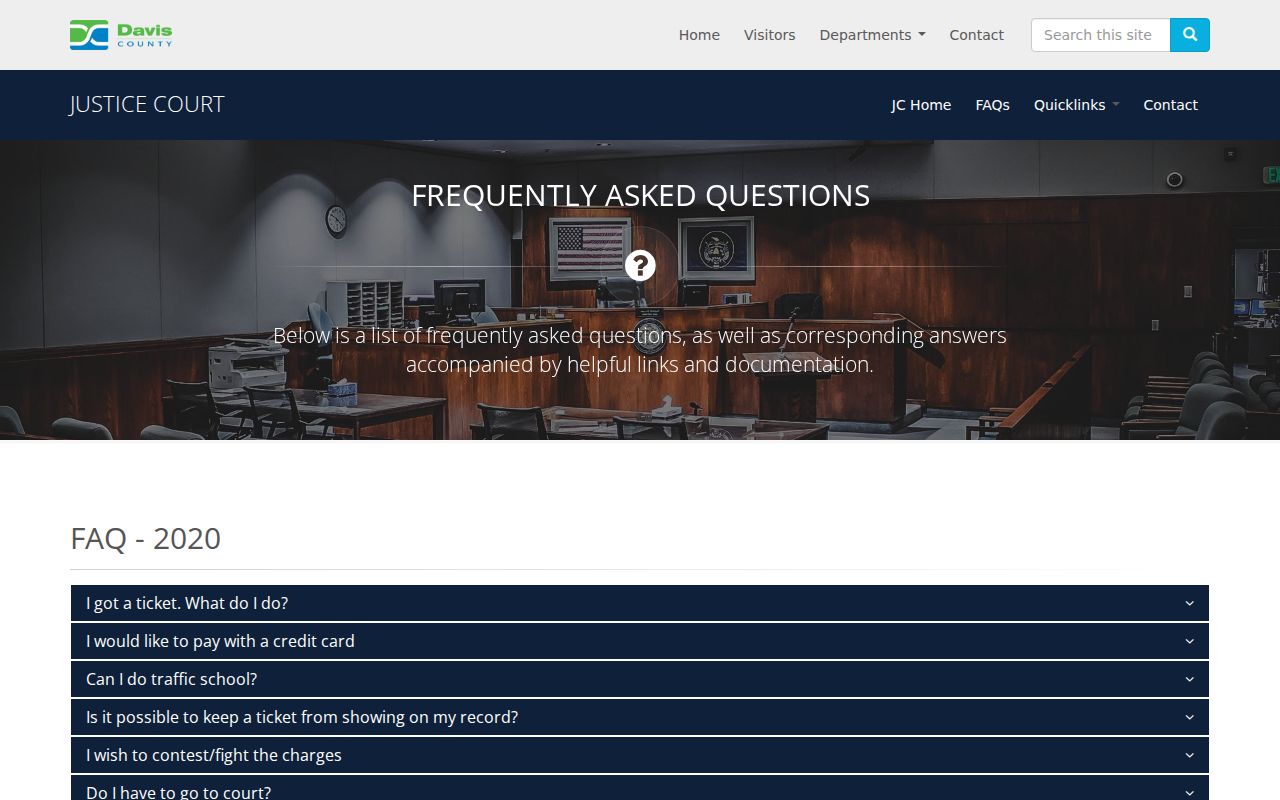
A promise to appear and a recall are two different things in Utah. Davis County Justice Court says so plainly. Its FAQ explains that arranging a date alone does not clear the warrant, and it describes local steps like payment or an appearance before a judge. Utah County Sheriff's published guidance agrees. Its promise-to-appear process does not clear the warrant until the person actually appears. These are county rules, not one statewide rule. Still, the lesson holds. Only the issuing Utah court can confirm a change. The Davis County Justice Court FAQ is a local answer, not a Utah-wide form. Ask the Utah court listed on the case what proof of appearance, payment, or recall it will enter.
A sheriff's service channel shows whether its agency has acted. It cannot replace the Utah court's recall entry or its case instructions.
Note: Utah county procedures can differ, so an arrangement described by one court should not be treated as a rule for other courts.
Utah's Rule 4-703 Is Not Automatic Warrant Expiration
Utah UCJA Rule 4-703 gives courts a cleanup process, not an expiration date. It covers older parking, traffic, infraction, and misdemeanor matters. Some Utah bench warrants at least one year old qualify. Nothing happens on its own, though. The rule runs on an order to show cause, notice to the prosecution, and a court action. Clerks may prepare eligible cases on a recurring schedule. That is a docket procedure, not a Utah statewide amnesty. The issuing Utah court decides whether a case qualifies and whether an order was entered. Ask the Utah court clerk about the rule and the current docket. Do not trust the age of an entry alone. A blank Utah statewide search or a county's list status is not proof the court dismissed the case.
Note: Utah's older-case process requires court action and notice; a warrant does not automatically expire when it reaches one year.
Finding the Court That Issued It
A bench warrant stays with the Utah court that opened the case. No other Utah court can recall it. Neither a different judge, a county sheriff, nor BCI can undo that order. Read the ticket or court notice. The court name and case number are printed there. If a name search turns up a possible match, ask the Utah court clerk whether the warrant is current, whether an appearance is required, and what resolves the matter. A Utah Justice Court case needs one more question. Is it county or municipal? A Utah city ordinance or traffic case can belong to a municipal Justice Court. Utah District Court handles felonies and other general-jurisdiction cases. Utah juvenile matters follow a separate privacy route. The Utah county directory collects county court and sheriff links, and the Utah Courts directory lists court contacts. Use the Utah warrant lookup as a statewide starting point, then confirm with the issuing Utah court.