
Utah Municipal Court Warrants Explained
Utah city ordinance cases go to Municipal Justice Courts, and those Utah courts also hear other lower-level matters within their jurisdiction. A Utah municipal warrant is an order in a case that local court holds. Common triggers are simple. A missed required appearance, failure to comply with a Utah court order, or another event the law permits can bring one. The order does not become a new arrest warrant just because a search result shows it, and it does not move the Utah case to a county sheriff. The issuing court keeps the file. That Utah court decides whether you must appear, pay an amount, request a hearing, or seek recall. Names vary. A failure to appear (FTA) order is often called a bench warrant in Utah, or a warrant for failure to appear. Capias is a term from some other states. It is not the general statewide label for a Utah missed-date warrant. Recall has one meaning. The issuing Utah court formally withdraws its warrant. Let the exact name on the Utah court notice and case record guide the next step. Structure matters too. City courts sit within Utah's Justice Court system alongside county Justice Courts. The Utah District Court holds general jurisdiction and takes felony cases. The Supreme Court and Court of Appeals handle appeals. So a Utah municipal case usually means contacting the city court that handled the citation or ordinance, not a different court nearby.
Utah Municipal Courts Are Local Justice Courts
Utah municipal courts are Justice Courts, each one established by a municipality itself. That makes them Utah courts in the state judicial system, not offices inside the county sheriff. These Utah courts hear local ordinances, traffic cases, infractions, and qualifying lower-level misdemeanors. The District Court is the general-jurisdiction trial court. It handles felony cases. The Utah Supreme Court and Court of Appeals perform the appellate roles. The scale is easy to see. The Utah Courts overview reports 115 county and municipal Justice Courts and 81 Justice Court judges statewide. Those are structure figures. They do not count municipal warrants or public searches. Each Utah court's clerk maintains that court's own cases, and the court determines how a warrant is entered, recalled, or resolved. The Utah Courts Justice Court overview describes this county and municipal court tier.
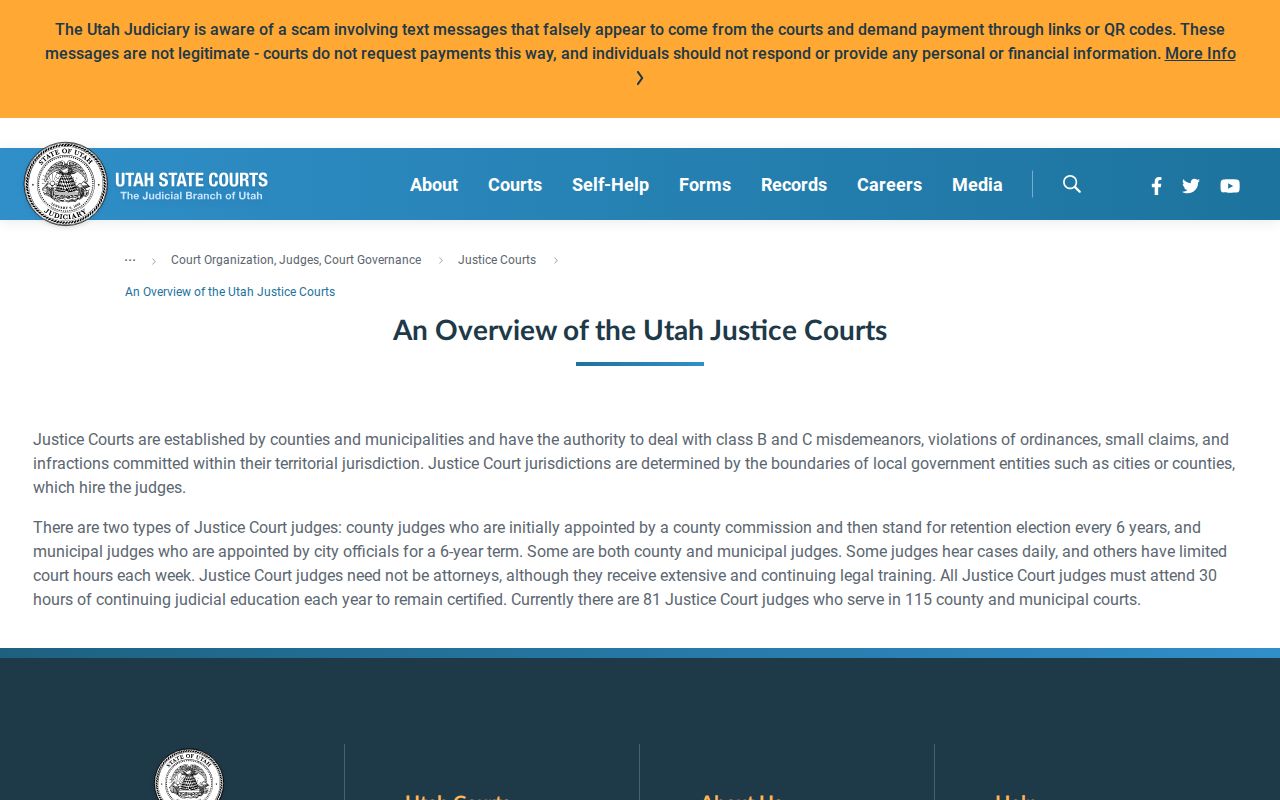
The Utah court overview gives jurisdiction context only. It cannot confirm the status of any single city's warrant.
Municipal and County Warrants Compared
In Utah, "county" can point to two different offices. A Utah municipal Justice Court issues and keeps warrants in its own cases. A county Justice Court does the same within its own Utah jurisdiction. A sheriff's role is different. A Utah sheriff may serve a warrant. Service does not make the sheriff the issuing Utah court or the official who can recall the order.
| Question | Municipal Justice Court warrant | County Justice Court warrant |
|---|---|---|
| Issuing court | The city or municipal Justice Court handling the case | The county Justice Court handling the case |
| Common case type | City ordinance, local traffic, or other matter within city jurisdiction | County traffic, infraction, county ordinance, or lower-level case within its jurisdiction |
| Case record | Held by the municipal court clerk | Held by the county Justice Court clerk |
| Possible service agency | Municipal police, sheriff, or another authorized agency named for service | County sheriff, municipal police, or another agency with authority |
| Confirmation | Ask the issuing municipal court about status and recall | Ask the issuing county court about status and recall |
A BCI statewide name search can surface a covered Utah warrant. Still, no local Utah list is complete. The Utah court name and case number guide you better than the county or city where a person lives.
Utah City Police and County Sheriffs May Both Serve Warrants
Service roles overlap in Utah. A Utah municipal police department may execute a city court warrant, while a county sheriff may serve court warrants assigned to the county or authorized by law. The Utah warrant itself may name an agency with jurisdiction. The serving agency can explain booking or service logistics. But the issuing Utah court keeps the case and controls recall. That split trips people up. Some ask a sheriff to change a court order, or assume the city court can confirm a separate county case. Match the Utah question to the problem. Missed dates, payments, and recall belong with the court. Service belongs with the named agency or sheriff. When the issuing Utah court is unclear, use the case number and the official county directory to find the right local contact. Utah Code §77-7-5 governs arrest-warrant issuance and identifies the agency with jurisdiction. A Utah municipal bench warrant still follows the order and court process for its own case.
Checking a Utah Municipal Warrant
Start with the city court named on the citation or notice. That Utah court holds the case and answers the warrant question. The Utah Department of Public Safety's Bureau of Criminal Identification (BCI) also runs a free Utah Statewide Warrants search covering many records, though it is no proof that every Utah municipal court file was searched. A court can share details of its own case once identity and access rights are confirmed. The Utah SWW manual states the limit plainly. One Utah court may not disclose a warrant another court issued.
- Find the city or municipal Justice Court and the case number on the original notice if available.
- Use the BCI public statewide warrant search for an initial name check, then contact the issuing court about its own docket.
- Ask whether the warrant is active, what appearance or payment is due, and whether a judge must enter a recall order.
- Use the Utah county directory to route to local court and sheriff contacts if the right office is unclear.
Salt Lake City's Justice Court offers one Utah local example. Its public FAQ points residents toward the statewide warrant search and the court's own resources. The Salt Lake City Justice Court FAQ shows how a city court routes a warrant question. But that channel cannot confirm a Utah warrant from a different municipality.
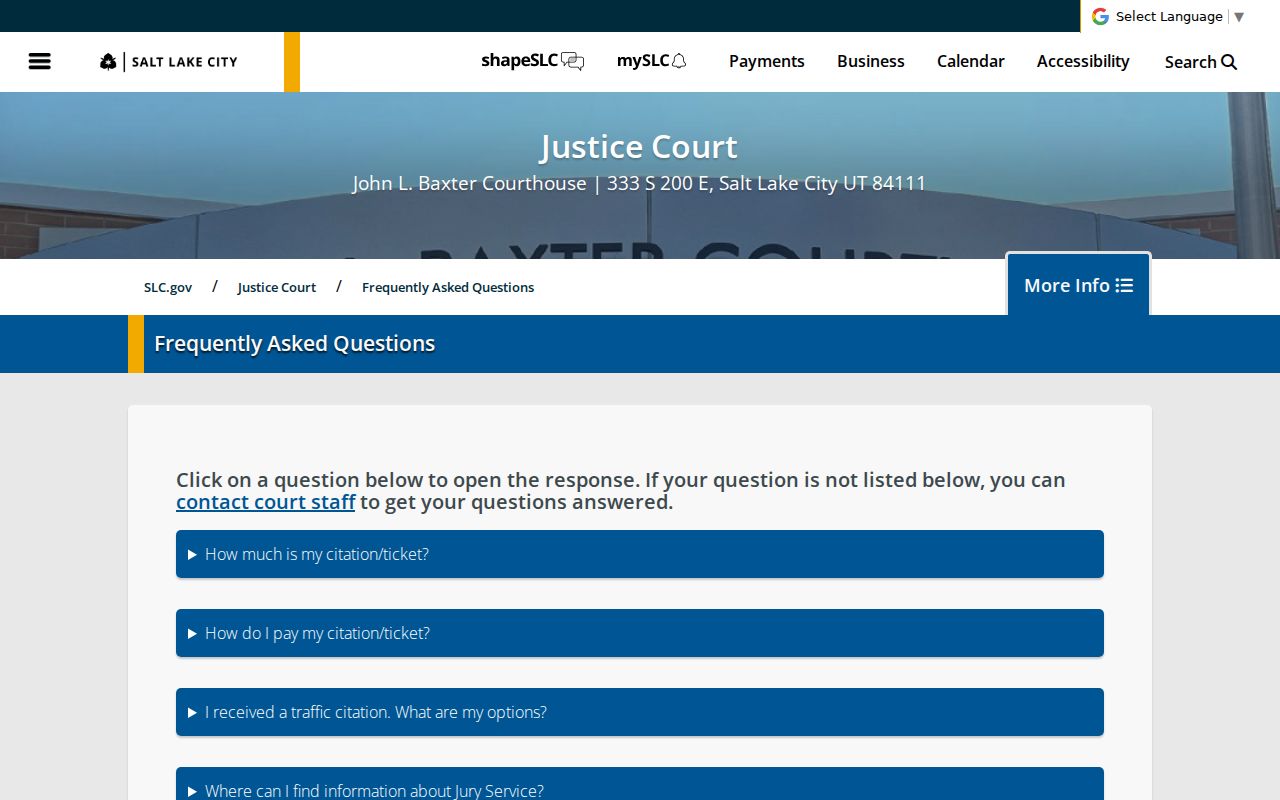
One Utah court's local route serves as the example; confirm with the court named in your own case.
Paying a Utah City Ticket May Still Require Court Confirmation
Paying a Utah ticket settles the amount due, but it does not automatically recall a warrant. The issuing Utah court decides whether an appearance, an order, or some other step is still required. Never assume a payment or a new court date ends the warrant until the Utah court confirms the case was updated. Payment portals and local rules differ, so what one Justice Court describes may not hold in another Utah city. Davis County Justice Court's FAQ tells people to contact each issuing court for Utah warrant information, a useful reminder that one court cannot verify another's cases. Its guidance sets no statewide Utah payment, fee, or recall policy. The Davis County Justice Court FAQ lays out that court's own warrant-inquiry and case-resolution route.
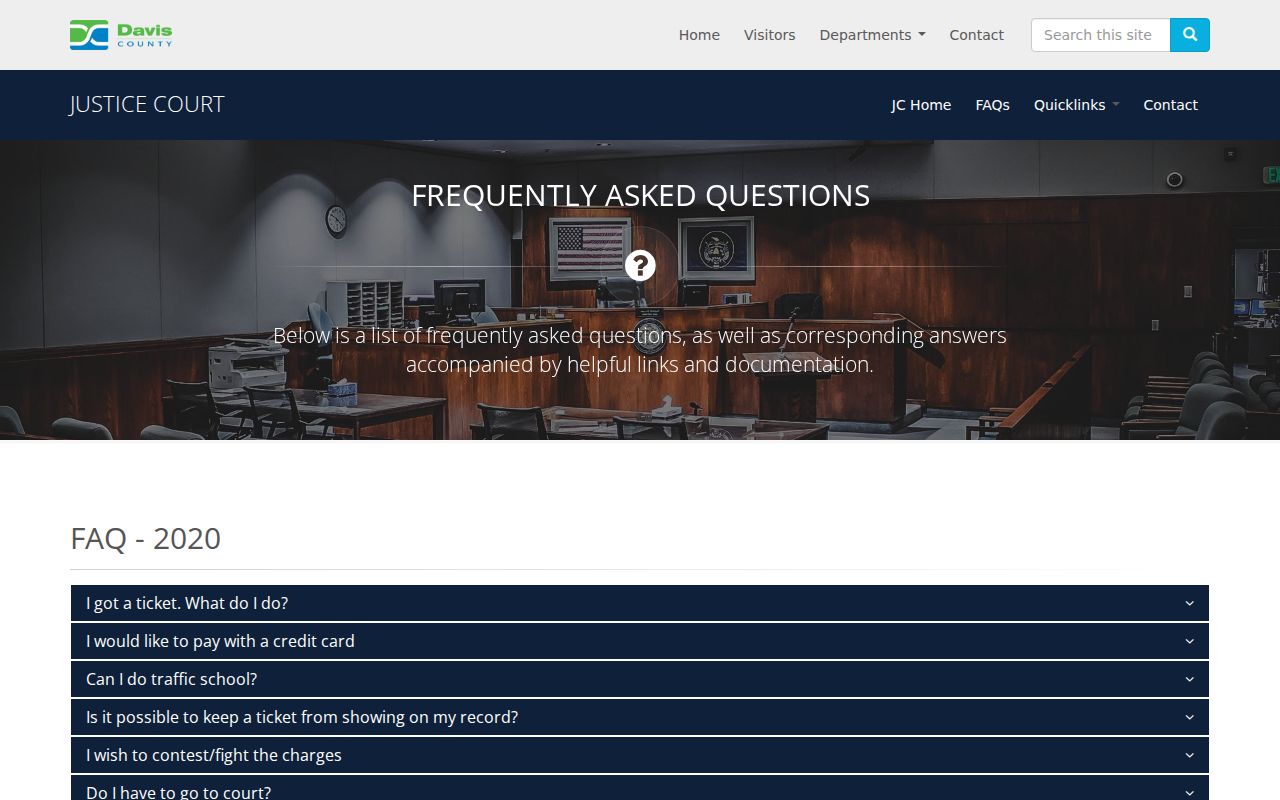
Treat the FAQ as one local example. Always check with the municipal court named on your own Utah case before relying on payment or appearance instructions. Note: A payment receipt is helpful proof, but only the issuing court can confirm that a warrant recall was entered.
Inside a Utah Municipal Warrant
A Utah public warrant result or court document may carry enough to identify a case. There is no single statewide layout for every Utah municipal warrant. Official BCI training shows a name, age, case number, court name, and charge information in its public demonstration. Local court documents vary. Some hide internal service or recall fields entirely. Use the Utah court and case identifiers to aim a question at the clerk. A public result may omit the bond, judge, issue date, or current service event. The issuing Utah court can explain the fields in its docket and whether the status has changed.
| Warrant number | Court-assigned number identifies the Utah warrant; numbering practices vary, and no statewide municipal format was found. |
|---|---|
| Offense or ordinance | The charge or local ordinance linked to the case; confirm the current docket with the issuing court. |
| Issuing city court | The municipal Justice Court that entered the order and controls its recall. |
| Bond or fine | May depend on the case and court order; do not infer a statewide amount from a search result. |
| Status | Ask the issuing court whether the warrant is active, served, recalled, or otherwise resolved. |
| Case number | Use it to help the clerk identify the correct file; public examples may show the court and charge with it. |
For a Utah municipal warrant, "served" and "recalled" are different events. A court record, a law-enforcement update, and a public search may not change at the same moment.
Utah's Rule 4-703 May Reach Some Old Municipal Warrants
Utah Code of Judicial Administration Rule 4-703 creates a court-ordered path for some older parking, traffic, and infraction citations and misdemeanor bench warrants. The rule can reach qualifying Utah matters at least one year old through an order-to-show-cause process. Court action is required. A Utah warrant never expires by itself just because time passed. The rule is narrow. It creates no statewide Utah amnesty and covers far from every municipal warrant. Eligibility limits apply, notice goes to the prosecution, and a judge must sign the order. Ask the issuing Utah court whether the specific case fits. Keep responding to notices regardless of a warrant's age, and never assume the court already dismissed the case. The current Utah Rule 4-703 text explains the eligible dismissal procedure. Contact the court named in the record for timing, case status, or an appearance date. Note: Utah's old-warrant process is a court procedure for qualifying cases, not an automatic expiration date or statewide amnesty.
How to Resolve a Utah Municipal Warrant
Only the issuing Utah municipal court decides what clears a specific warrant. The requirements vary by Utah case. The court may demand fine payment, a payment plan, an appearance before a judge, a hearing, or a bond or other release condition. A bond is a court-ordered financial condition for release or appearance. Paying one does not dispose of the Utah case. No universal Utah bond amount, surrender protocol, or payment method fits every city. Ask the clerk what the judge ordered, and whether any payment resolves the underlying citation as well as the warrant.
- Confirm the issuing municipal court, case number, and current warrant status.
- Ask whether the court expects a payment, a scheduled appearance, a motion, or a judge's review.
- Confirm any bond or release terms with the court or the serving agency before acting.
- After the required step, obtain a docket, receipt, or recall confirmation and ask whether another appearance remains.
Need local access? The Utah county directory connects you to the city court plus the sheriff or police contact for service questions. If the Utah issue involves an FTA-related license status, the Utah Driver License Division (DLD) runs a separate reinstatement process. Its fees do not recall a municipal court warrant.
Caution: Do not treat a ticket payment, a different court's answer, or an old case date as proof of recall; confirm the order with the issuing municipal court.
Use Utah Court Access Rules for a Municipal Case Copy
A Utah online search that leaves you with questions still has a next step. Ask the court that keeps the record for a copy. Utah courts follow their own access rules, not the GRAMA process used by executive-branch agencies. That difference matters. A written request under Utah Code of Judicial Administration Rule 4-202.04 should describe the case record you want. Courts generally respond within 10 business days. The record's classification and the applicable rules control what comes back. Juvenile, sealed, private, and protected records may be withheld. A GRAMA request to BCI or a sheriff is a different route, because those agencies hold different records. BCI's records request page explains its process. Statutory disclosure limits still apply to internal warrant information. Filing a request does not force a court to recall a warrant. Law enforcement may give limited information to a positively identified person. Even so, BCI's manual says an agency should not hand out a warrant printout. Ask the municipal clerk for the court's own docket and order instead. Keep the Utah issuing court straight when you call. A city court cannot confirm another court's warrant. A county sheriff's service information is no substitute for the city court's Utah record. For local contacts, follow the Utah county directory or the official Utah Courts directory; for court-record rules, use the Utah Courts request-a-record instructions. Note: Court-record access, agency GRAMA access, and a warrant-recall decision are separate Utah processes.