
Utah Traffic Warrants Explained
A Utah traffic warrant is a court order tied to a citation. The ticket itself usually spells out your options. Some Utah cases require an appearance. Others let you pay a fine instead of showing up. Under Utah Code §77-7-19, a judge may issue a bench warrant when a cited driver fails to appear, the familiar FTA, or fails to pay a fine the law allows you to pay instead. That word "may" carries real weight here. An overdue Utah ticket does not turn into a warrant on its own. The court decides. The case stays with the court holding jurisdiction, which in Utah is usually a county or municipal Justice Court. That court sets whether you must appear and what cures a missed date. The Utah Driver License Division (DLD) tracks a separate license status, but that status is not the court's warrant. Clearing one record does not clear the other. A Utah ticket payment, an FTA clearance, a warrant recall, and a license reinstatement are distinct steps, each with its own paper trail. So start with the notice or citation in hand. Read it for the court name and case number. The statewide public warrant search offers another lead, and it is a useful cross-check for your own Utah case. Still, only the issuing court can confirm whether its order remains active and what is due.
Utah's Rule 4-701 14/40-Day Steps Apply to Specific Citations
Utah Code of Judicial Administration Rule 4-701 lays out a narrow path for citations where no court appearance is required. For those Utah cases only, the clock works like this. After 14 days, a clerk may add a $50 delinquency fee and mail you notice. After 40 days more, the court may add a $75 fee and issue an FTA warrant. A juvenile flag changes things. The rule's own terms and your Utah case conditions control every step. Treat this as a specific procedure, not a universal timeline. Other Utah citations require a hearing, carry a different response window, or follow a distinct local process. Your citation and the court docket tell you which route applies. Unsure which one governs your case? Call the court before sending money or assuming the missed date was excused. The Utah clerk can say whether the judge expects payment, an appearance, or something else. The official Utah Rule 4-701 text sets the full scope of this notice and warrant process, and it does not fix a single FTA amount for every lower-court case. Note: the 14-day and 40-day steps apply only to qualifying citations with no required appearance, not to every Utah traffic case.
Utah FTA and License-Hold Systems
One missed Utah traffic case can touch several records, yet no single public "hold" portal ties them together. Utah Statewide Warrants, or SWW, is the warrant-information file inside the Utah Criminal Justice Information System (UCJIS). The Utah Department of Public Safety (DPS) and its Bureau of Criminal Identification (BCI) administer it. Your issuing Utah Justice Court keeps the citation and warrant case itself. Utah DLD separately handles license status and reinstatement instructions. Utah publishes no public statewide FTA license-hold search and no OmniBase-style pay-or-lift service.
| System or channel | What it holds | Run by |
|---|---|---|
| Utah Statewide Warrants (SWW) | Covered warrant information for a public statewide name search; it is not a driver-license hold account | Utah DPS / BCI |
| Issuing Justice Court | The citation, court docket, FTA event, and any warrant or recall order in that case | County or municipal Justice Court |
| DLD status guidance | License-status terms such as SFTA and instructions for reinstatement; no public individualized FTA-warrant lookup | Utah Driver License Division |
A Utah state search may flag a covered warrant, but the court record is what moves a case. DLD guidance on a license consequence only applies after the court supplies proof of clearance. Each Utah system answers its own question, and they share no public status page. Here, "license hold" means a separate DLD status or reinstatement consequence tied to the court case, not the warrant itself.
A Utah Traffic Warrant Is Not an SFTA License Record
Utah DLD uses the status code SFTA for a suspension tied to failure to appear or comply. The code is administrative. It is not a warrant's name. It also does not prove the court recalled its order. A Utah Justice Court can hold an FTA case open while DLD separately tracks the effect on your driving privilege. One driver may need to resolve both records. Each Utah agency answers a different question. Use the DLD glossary to decode the term, not to hunt a warrant. It is a static status reference. The public SWW warrant search has limits too. An archived official form shows required first and last name fields, an optional middle initial, a CAPTCHA, and a Continue button. There is no DLD field, and a clean result there does not prove a Utah license hold was cleared.
- FTA
- Failure to appear, a missed required court date or response that may lead to a bench warrant.
- Bench warrant
- A court order often tied to a missed appearance or failure to comply; the issuing court controls it.
- SFTA
- DLD's failure-to-appear/comply suspension code for license status, separate from a court warrant.
- License hold
- A separate DLD status or reinstatement issue related to the case; it is not the warrant and DLD does not recall court orders.
Note: Court warrant status and DLD license status can change on different schedules. Confirm each with its own Utah record holder.
Checking for a Utah Traffic Warrant
Your citation or court notice names the Utah court that issued the warrant, so start there. Lost the papers? The BCI public statewide search works as a first look, though it is not a certified court clearance. A Utah Justice Court may give more through its own case search or its clerk and records desk. A county sheriff's warrant unit can answer Utah service or booking questions where that channel is offered, but only the issuing court can recall the warrant.
- Read the court name and case number on the citation, notice, or official result.
- Search the free Utah Statewide Warrants portal or reach it from BCI's public search page; the archived form requires first and last name and accepts an optional middle initial.
- Contact the Justice Court on the citation to ask whether a warrant issued, whether the case requires an appearance, and what action resolves it.
- Use the Utah county directory to route to the local court and sheriff if you need the correct local channel.
For statewide context, the Utah warrant lookup page covers what the BCI index shows and what it cannot. The Utah Courts directory pinpoints the right court. Record requests to a Utah court follow the judicial access rules; requests to Utah BCI or a sheriff go through that agency's GRAMA process.
Utah Has No Public Statewide FTA Hold Lookup Located
Utah publishes no single combined lookup for failure-to-appear warrants and license holds. The state's own pages describe the gap. Utah DLD posts reinstatement instructions and a static list of license status codes, but neither page searches by driver-license number. The BCI portal covers only covered warrants, and Utah offers no public vendor or single payment page that clears court and license records together. That limit matters when a caller or website claims one payment removes every Utah traffic hold. Confirm the warrant with the Utah court. Ask the sheriff about service. Utah DLD's official guidance covers only license status and reinstatement, and an information page is never a personal status result, so send no payment to an unsolicited caller claiming to be the court or state. A Utah statewide system may hold court warrant information yet still miss court events or administrative license actions, since court participation and update schedules have no public dashboard. A blank Utah portal result does not prove the absence of a citation, warrant, or license issue; the citation court and DLD each keep their own records. Note: Utah's public warrant search and DLD's reinstatement guidance serve different purposes; neither is a combined traffic-case clearance certificate.
How to Lift a Utah Traffic Warrant
Ask the Utah issuing court what actually resolves the case. A payment may satisfy a citation balance without recalling a separate bench warrant. The court may instead require an appearance, a new hearing date, a motion, or a payment plan. Utah sets no statewide rule making one option available in every traffic case. There is no universal warrant bond or recall fee either.
- Ask the court whether the citation permits payment or requires an appearance.
- Confirm whether payment alone recalls the warrant or whether the judge must enter a separate order.
- Keep a receipt and obtain a docket or other court record showing that the FTA was cleared.
- If DLD shows SFTA, follow its separate reinstatement steps after the court clearance is recorded.
The Utah court's direction controls the warrant. If a separate license suspension applies, Utah DLD's current instructions say to pay court fees, obtain a docket showing FTA clearance, and then pay $40 per citation for reinstatement. That DLD amount is not the warrant bond, the ticket fine, or a Utah court fee.
Caution: Do not assume that paying a ticket or a DLD fee recalls a court warrant; ask the issuing Justice Court what order or appearance is still required.
Clear the Utah Court Case Before Paying DLD's Fee
Resolve the Utah court record first when a missed appearance touched a license. DLD's reinstatement page spells out the sequence: pay court fees, obtain a docket showing the FTA is cleared, then pay a separate $40 fee per citation. The exact Utah court balance and any extra steps depend on the case. DLD cannot recall the warrant, because it does not control the Utah court docket. The Utah DLD FTA reinstatement instructions explain that Utah sequence and fee, and they are not a personal warrant search or a combined pay-to-clear portal.
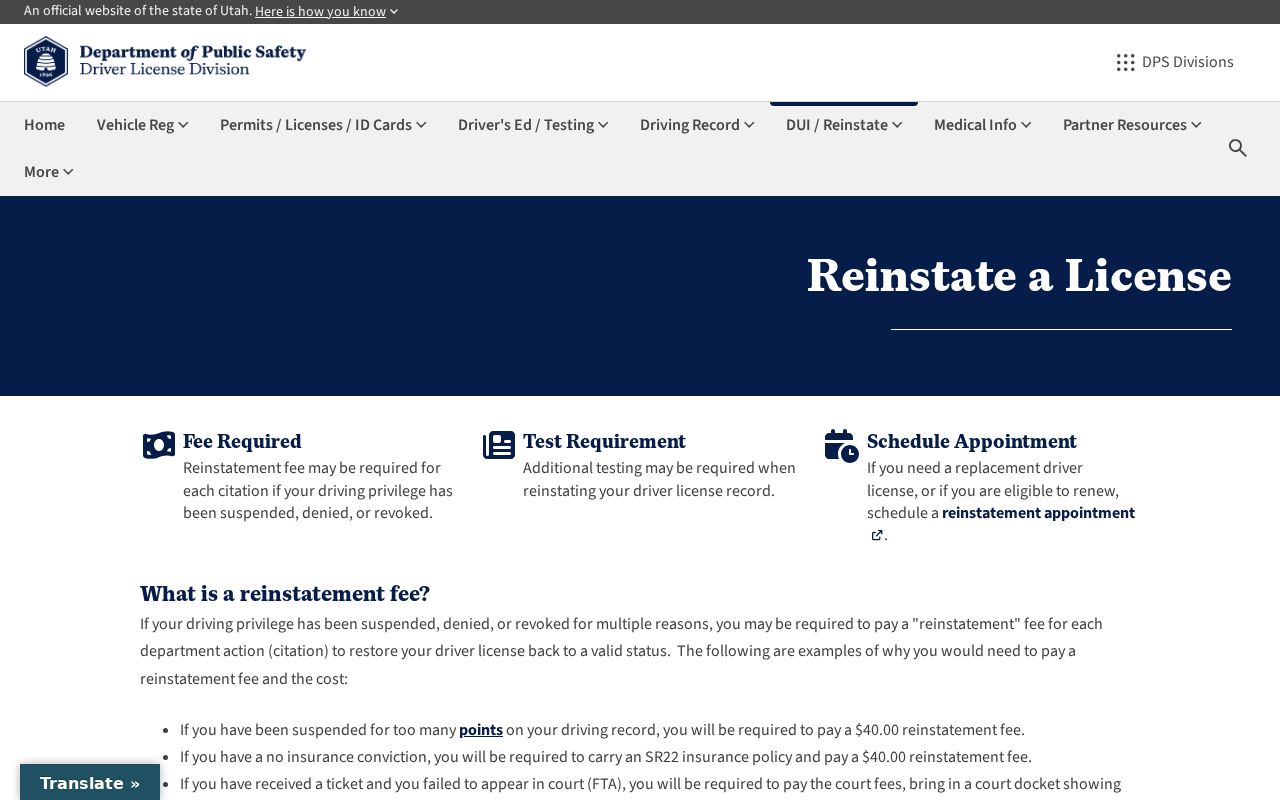
Once the Utah case is resolved, keep the docket or court receipt and follow DLD's official reinstatement steps. If Utah DLD still shows a status code, ask DLD about the license record and the issuing Utah court about the warrant. Note: Court clearance is the proof DLD requests; it does not turn the DLD fee into a court payment or warrant recall.
How a Traffic Warrant Differs From a Driver Record
A Utah traffic warrant belongs to a court case, such as a citation with a missed required appearance. A Utah driver-license record covers driving privileges and administrative actions. The same missed date can create both. Still, one Utah record is no substitute for the other.
| Question | Court traffic warrant | DLD license status |
|---|---|---|
| What it concerns | Citation, required appearance, FTA, and any bench warrant | Driving privilege status, including SFTA |
| Record holder | Issuing municipal or county Justice Court; BCI may index covered warrants | Utah Driver License Division |
| Public channel | BCI statewide search and the issuing court's case access or clerk | Static DLD status and reinstatement guidance; no public individual FTA-hold search found |
| How to resolve | Follow the court's payment, appearance, motion, or recall direction | Meet DLD's reinstatement steps after court clearance |
| Fee | Case-specific court balance or cost | $40 per citation listed for FTA reinstatement |
The Utah DLD license status code glossary defines SFTA but searches no one's account. Its static Utah content explains the code without showing any individual's status.
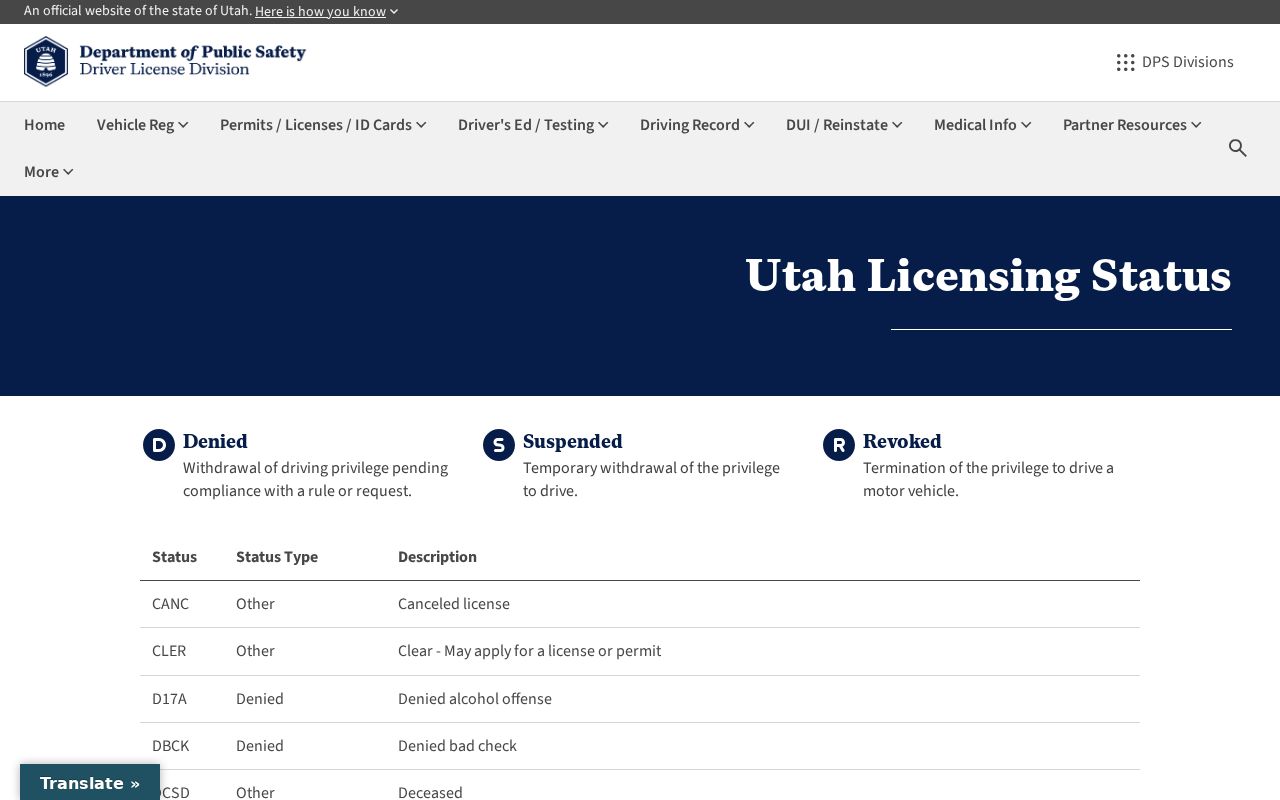
A court clerk confirms a court warrant; DLD handles license-status questions. If both need attention, contact each record holder.
Start a Utah Traffic Warrant Check with the Issuing Justice Court
A missed Utah traffic date usually lands in a Justice Court, and that issuing court is where the answers live. Call the clerk first. Give the Utah citation number if you have it, then ask four things: was a failure to appear entered, did a bench warrant issue, can payment clear it, or does the recall need a hearing or a judge's approval. If the Utah court says the case is already clear, ask for a docket entry or receipt showing that result. No other Utah court can confirm this one's warrant, so work from the court printed on the ticket; when that is unclear, the Utah county directory points to local courts and sheriff contacts. The sheriff's office handles service and booking questions, while the clerk speaks for the case itself and any recall order. Beyond the phone call, Utah Courts offers Xchange for eligible case information. Need a copy instead? A written request under Utah Code of Judicial Administration Rule 4-202.04 is the route. Utah courts generally answer within about 10 business days, though record type and access rules can stretch that. Juvenile and other protected records may stay closed to the public. One caution: a Government Records Access and Management Act (GRAMA) request goes to an executive agency like BCI or a sheriff, and it does not replace the court-record request; Utah BCI's request page explains that separate agency process. Note: a traffic citation, an FTA warrant, and a DLD status can each need separate confirmation even though all three trace back to one missed Utah court date.