
Checking for a Warrant in Utah
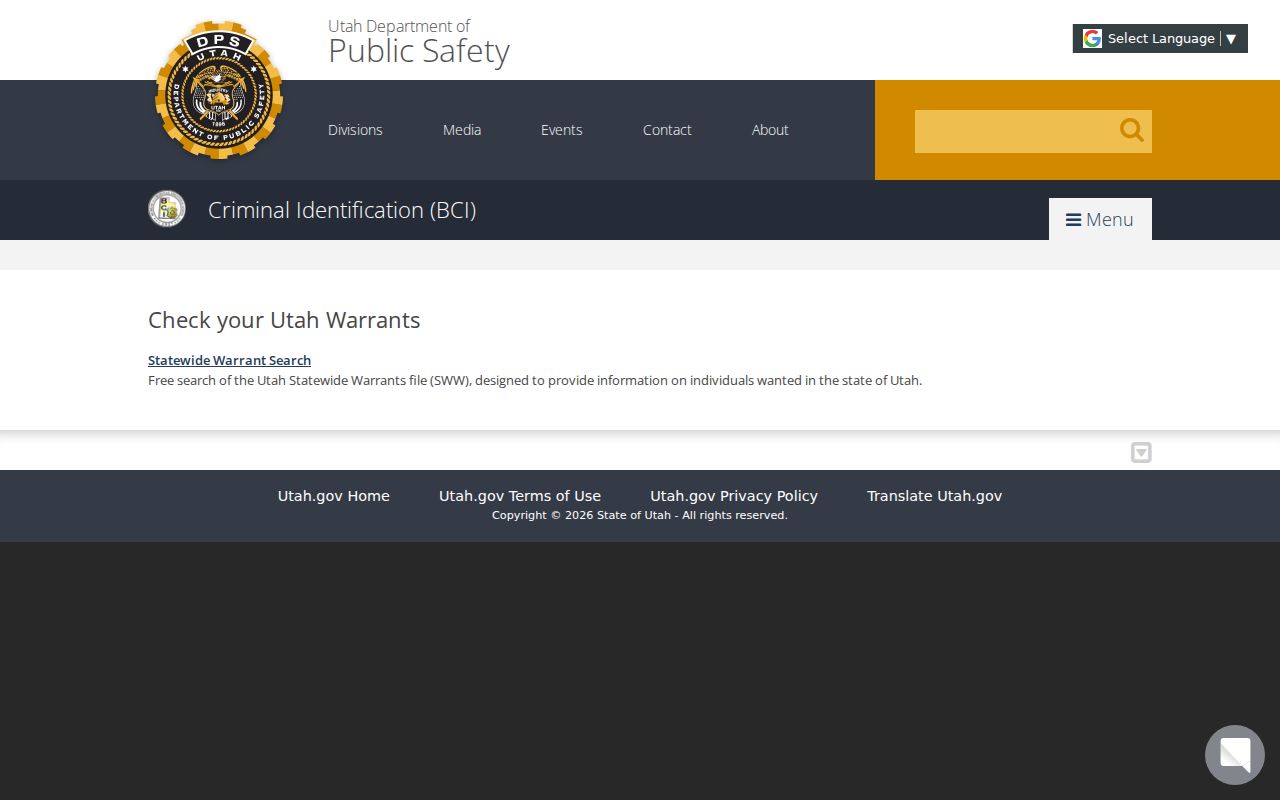
Utah's Bureau of Criminal Identification (BCI) runs the public Statewide Warrants search, and its warrant page is the best first stop. Type in a name. The result is a lead, not the last word. The court that issued the warrant keeps the controlling record and decides what clears it. A Utah District Court clerk handles District Court cases. County and municipal Justice Court clerks keep their own traffic, ordinance, infraction, and lower-level criminal matters. Sheriffs and municipal police can explain service. Only the court can resolve its order. Work more than one channel when you know the court or the case. A hit may give a court or case lead. A blank result does not prove that no Utah warrant exists, so ask the clerk directly; the court can confirm its own entry and lay out the next step. For local routes, the Utah County Directory links each county to its own warrant-records homepage, which helps you find the local court and sheriff.
- Open BCI's public page and follow its link to the free SWW name search. The archived public screen asks for first and last name, allows a middle initial, and requires CAPTCHA verification.
- Write down any court name or case reference shown. Contact that issuing court through the official Utah Courts directory to confirm status, appearance requirements, and the next step.
- If the result is blank, check the court on the citation, notice, or case paperwork. Use Xchange for public case context or MyCase for eligible personal cases, then ask the court clerk to confirm the warrant itself.
- For a service or booking question, contact the sheriff or municipal police agency responsible for the county or court. County methods differ, and not every sheriff publishes a separate name-search roster.
- For a traffic FTA, ask the Justice Court about the case and separately check DLD's reinstatement instructions if the driver's license has an SFTA status.
- For a copy of a court document, follow the court's written-record process. Use an agency GRAMA process for BCI or sheriff records, subject to access limits.
- Keep the court's confirmation, receipt, and any order. A lawyer can help with an appearance, surrender, release terms, or a motion to recall when those steps are needed.
Note: A statewide result is a useful lead, but only the issuing court can confirm whether its warrant remains active.
Utah Warrant Search Fields
BCI offers a free public statewide name search. The field reference is its 2021 UCJIS dissemination capture. That image shows a short form, with no advanced public filters by court, county, warrant type, or date. BCI's current warrant page stays the official entry point for a Utah warrant check. The table covers that dated capture alone. Treat any result as a route to the issuing court, not proof that the record is complete or legally cleared.
| Field or control | Requirement | What the public capture shows |
|---|---|---|
| First name | Required | Text field for a name search |
| Last name | Required | Text field for a name search |
| Middle initial | Optional | Text field in the archived form |
| reCAPTCHA | Required to proceed in the capture | Human-verification control |
| Continue | Button | Advances from the name form |
The dated capture of Utah's public form shows no county selector, agency menu, DOB field, warrant-type filter, pagination control, export, or result limit. That describes one capture. It is not a guarantee about today's interface. Secured UCJIS users have internal query options that stay closed to public view. The BCI public landing page remains the official starting point for any Utah warrant search. No searched name or result appears on it.
Utah courts still hold the record that verifies a match or a missing entry.
Inside the Utah Statewide Warrant System
Utah's Statewide Warrants file (SWW) lives inside UCJIS. DPS's Bureau of Criminal Identification administers it and monitors data quality. Courts create, update, and recall their own warrants. BCI's December 2025 manual describes outstanding felony, misdemeanor, and infraction warrants in the Utah file. Utah Code §53-10-208 covers felonies and class A, B, and C misdemeanors, plus traffic-citation FTA warrants ordered under §77-7-19(3), and names certain protective-order records. No county participation list exists. The state publishes no system start date. The form never says which categories it includes. The issuing court still holds the case, the bond, the recall, and the next appearance. The public search is a name view only. Full UCJIS transactions stay restricted to secured users. For the state and federal layers, see the Utah warrant system profile.
Note: The statewide file supports authorized justice work, while public access is limited to the search and records each agency makes available.
Utah Warrant Data Flow
Every Utah warrant record starts at the issuing court. District Court case activity can flow through CORIS into UCJIS, while Justice Courts may use the Warrant Management System (WMS) instead. BCI administers SWW. Authorized law enforcement reports service. The issuing court still controls recall and any other case update. A felony Utah warrant may also enter the restricted federal NCIC system, and that is not a public search. Utah law requires certain disposition data to reach BCI within 30 days. That deadline is not a real-time refresh promise. When timing matters, a clerk can check the docket, since a statewide result is an index rather than a replacement for the case record.
Utah Warrant Types
Utah courts use warrants for different jobs. An arrest warrant authorizes custody. A bench warrant usually follows a missed appearance or other noncompliance. Traffic cases often stay in county or municipal Justice Court, while felony cases generally move to District Court, so the court level tracks the underlying case. Utah sources typically call an FTA order a bench warrant or a warrant for failure to appear; “capias” is not the standard public term. A search warrant authorizes a search for evidence, not an arrest. Common categories include:
| Warrant type | How it arises | Who issues it |
|---|---|---|
| Arrest warrant | Probable cause and statutory need for a warrant instead of a summons | Judge or magistrate with jurisdiction |
| Bench / FTA warrant | Missed appearance, allowed payment deadline, or failure to comply with a court order | Court handling the underlying matter |
| Search warrant | Judicial authority to search for evidence under the applicable rule | Judge or magistrate |
| Federal warrant | Federal criminal process or a federal fugitive matter | U.S. District Court judge or magistrate judge |
Some civil or family proceedings bring contempt orders. Ordinary civil debt never becomes a criminal Utah warrant. Juvenile matters belong to Juvenile Court with added privacy limits, and the court record still governs even where another system shows a matching status.
Note: A label in a search result should be read in the context of the court case that created the warrant.
Utah Bench Warrants Start in Justice Court
A Utah warrant case usually begins in a Justice Court. These county and municipal courts hear traffic matters, infractions, local ordinance cases, and class B or C misdemeanors. Utah Courts counts 115 of them, with 81 judges. That's why a statewide search may point you to a city-court clerk. The Justice Court overview lays out their jurisdiction. Under Utah Code §77-7-19, a court may issue a bench warrant for certain failures to appear or pay. Requirements vary by citation and by court notice, so confirm the case deadline and whether you must attend before choosing a response.
- FTA
- Failure to appear when a court requires a person to respond or attend.
- Bench warrant
- A court order commonly tied to a missed appearance or other noncompliance.
- Recall
- The issuing court's action to withdraw its warrant from the case.
- SFTA
- DLD's license-status code for suspension after failure to appear or comply, separate from a warrant.
Keep in mind: A county Justice Court clerk and a municipal Justice Court clerk hold different cases; one court cannot settle every Utah warrant question.
Inside a Utah Warrant Record
What does a public Utah warrant record show? Often a name, age, case number, court, and charge. The public search does not expose every UCJIS field, so a result may be only part of the picture. Utah also uses no single reliable warrant-number format. Copy the reference straight from the official record rather than guessing at one. Status terms each describe a different event. "Active" still marks the item outstanding, "served" is a law-enforcement update, and "recalled" is a court action, while a bond amount alone does not tell you whether payment resolves the case.
| Case or warrant reference | Use the exact number shown in the public result or court docket; format varies by court and case. |
|---|---|
| Name and age | May appear in a public demonstration; confirm identity with the issuing court before relying on a match. |
| Charge or offense | May be displayed, but detail can vary and can become unavailable after recall. |
| Issuing court | Identifies the court that holds the authoritative case and decides what action is needed. |
| Bond or release term | Case-specific. Confirm amount and acceptable form with the court or jail. |
| Status and service | “Active,” service events, and recall represent different parts of the record lifecycle. |
Not everything in a Utah warrant file is searchable. Internal identifiers, service details, comments, and recall data stay out of the public filters, so treat any result as a lead rather than a certified docket or a complete list of court orders.
Note: Names can overlap, so use case numbers and court details to check identity before relying on a result.
Utah Warrant Recall and Service Timing
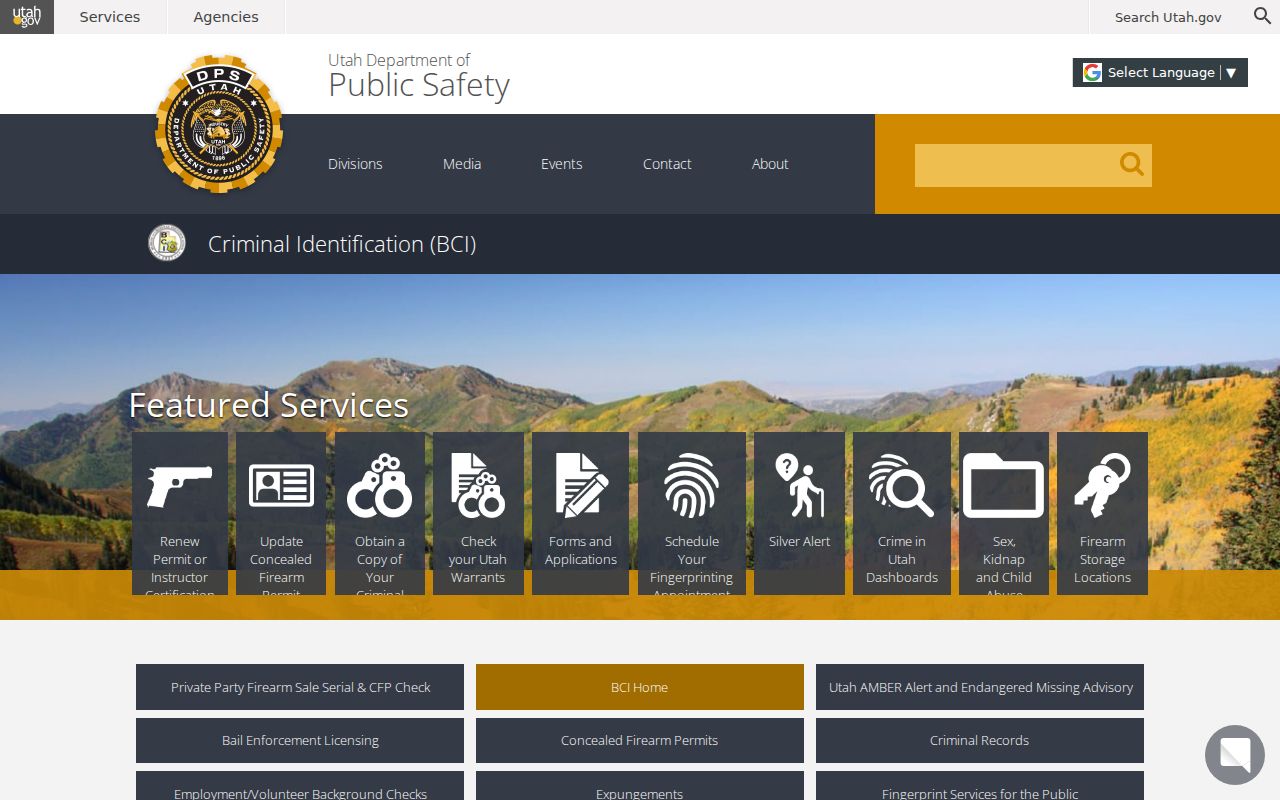
Timing matters with Utah warrant records. BCI's December 2025 SWW manual gives two figures. A recalled item drops out of UCJIS within about an hour. A served warrant can linger roughly 15 days if no recall gets entered. Those are internal mechanics, not a public refresh promise. If you paid or appeared, the issuing court can confirm its current docket and whether another order is needed, and BCI's official homepage lists agency contacts along with a warning about warrant-payment scams.
Reminder: Check unexpected payment demands through a number published by the court or agency, and ask the court about recall or release terms.
Utah Warrant Records and Public Access
Access to Utah warrant records varies. It depends who holds the record. Classification matters just as much, since a request for a court case goes through Utah Code of Judicial Administration rules rather than the executive-agency GRAMA route. Requests to BCI or a sheriff generally follow the Government Records Access and Management Act (GRAMA). But GRAMA won't turn restricted UCJIS information into a public file. Nor does a request force a recall. The issuing court still controls that. Juvenile records carry their own statutory privacy limits in Utah. Search-warrant applications and supporting material start out sealed under Utah Rule of Criminal Procedure 40, and a court can extend or alter access under that rule. Other files may be private or protected. A Utah public case system may leave a record out entirely or show only part of a file a court has restricted.
Utah access rules:
Utah Code §53-10-108 limits dissemination of criminal-history and arrest-warrant information from BCI files.
Utah Code §53-10-208 assigns BCI responsibility for a statewide warrant system and specifies categories and validation duties.
UCJA Rule 4-202.04 sets the written process for requesting court records.
Utah Rule of Criminal Procedure 40 governs sealing and later access to search-warrant materials.
Need a court case copy in Utah? File a written clerk request under UCJA Rule 4-202.04. Courts generally answer within 10 business days. Fees vary by record type and staff time, and neither Xchange's public case context nor MyCase's account access to eligible cases amounts to a warrant-only search.
Note: A record can be unavailable because of its category or a court order, even when related public docket information is visible.
Utah Traffic Warrant and SFTA Status
Miss a traffic date in Utah? One problem is a court warrant. The other is a license issue. They are not the same record, and fixing one doesn't always fix the other. The citation itself stays with the county or municipal Justice Court that received it. Utah Code §77-7-19 gives that court authority to issue a bench warrant for certain failures to appear or pay. DLD uses SFTA as a status code for failure to appear or comply. Utah posts no public statewide license-hold lookup. There's no single pay-or-lift portal either. DLD's public pages explain status and reinstatement steps, but they can't recall the court's warrant, so ask the issuing Justice Court what resolves the citation, whether a separate recall is needed, and what proof DLD requires.
| Question | Court warrant or citation | DLD status |
|---|---|---|
| What it tracks | Case response, appearance, payment, and any court warrant | Driving privilege and an SFTA suspension status |
| Who maintains it | Issuing county or municipal Justice Court; BCI may index a covered warrant | Utah Driver License Division |
| How to address it | Follow the court's payment, hearing, or recall instruction | Show court clearance, then follow DLD reinstatement steps |
| Published state fee | No universal warrant-clearance fee found; local balance varies | DLD lists $40 per citation for FTA reinstatement |
Utah's current DLD reinstatement page lists the steps in order. It says to satisfy court fees, obtain a court docket showing the FTA is cleared, and pay $40 per citation. Ask the court whether that same action also recalls the warrant. Paying DLD alone won't clear the court case.
Utah Warrant Technology and History
Utah's courts went digital well before the public could search warrants by name. The Utah Courts history notes an electronic warrant request and judicial review process running in 2008, part of the same era that brought CORIS to Justice Court case management. Those were internal milestones. Neither marks the day the SWW search opened to the public. The Utah Courts history covers that backdrop. On the law enforcement side, BCI training material from 2020 describes felony warrants in court records being uploaded to the FBI's restricted NCIC system under the responsible agency's ORI. Utah has never published an official count of outstanding SWW records. The 2025 manual lays out system duties and timing. It offers no earliest searchable date, no public refresh schedule, and no county completeness map.
Note: A court technology milestone can explain how information moves without proving how far back today's public search reaches.
Utah Warrant Resolution Stays Court Specific
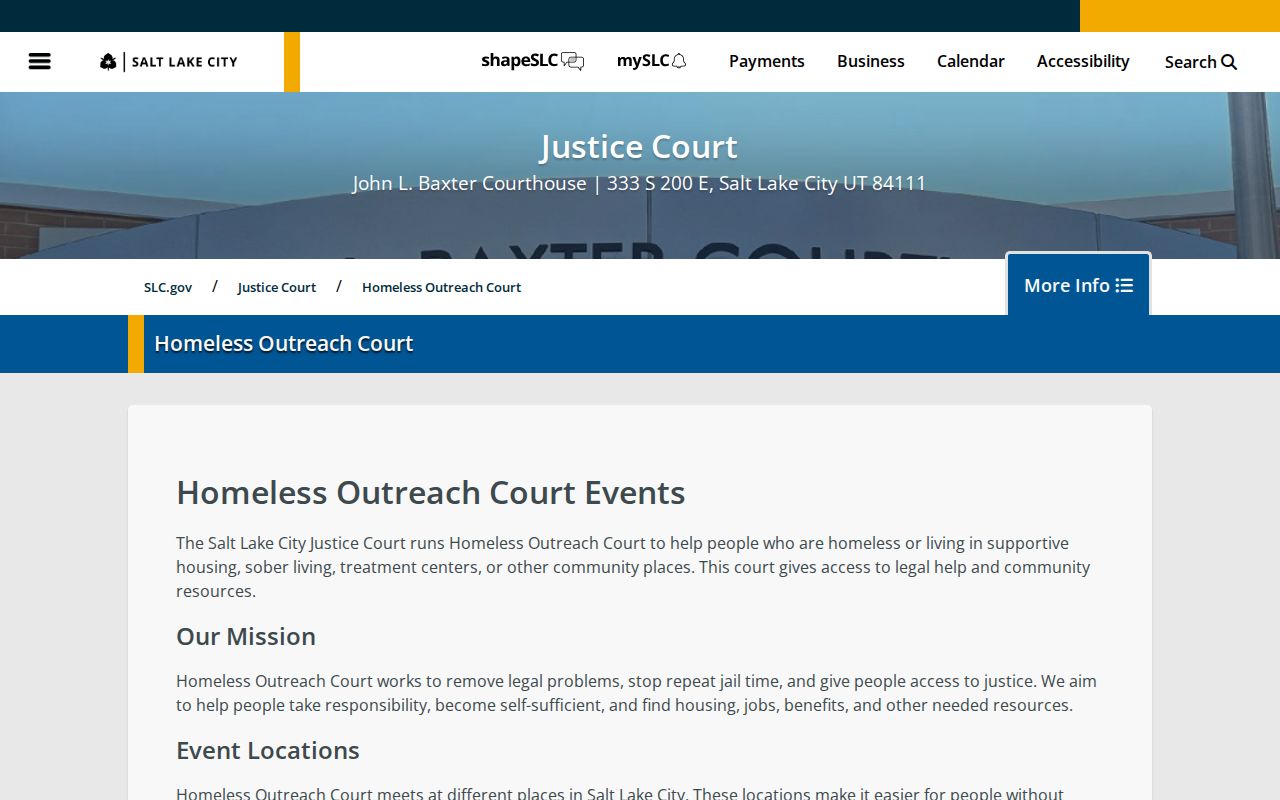
Utah sets no statewide warrant amnesty week and no single surrender process. Every Utah warrant runs through its own court. Start by asking the issuing court whether an active warrant is still open and what event clears it. Payment might do it. So might a hearing, a motion to recall or quash, an appearance, or surrender and service. Before going in person, ask the court or jail about the right location, identification, release terms, and which bond forms they take. Posting bond can secure release without resolving the case. Keep the receipt. Show up for any new date. And remember that an active warrant can lead to arrest whenever law enforcement encounters it. Some older Utah traffic and misdemeanor cases may qualify for UCJA Rule 4-703's order-to-show-cause process, but a warrant does not expire on its own; a judge must act. A few local programs can assist with eligible cases while leaving the state process unchanged. Salt Lake City operates a Community and Homeless Outreach Court, a city program with defined eligibility rather than a statewide warrant-clearance service, and it promises no dismissal, fee relief, or recall in any specific case. The official Salt Lake City program page describes that one limited local court path, not a statewide option.
Utah gives no shortcuts at this stage. Call the issuing court before any trip or payment. Ask what event clears the warrant, whether the sheriff has a service role, and how the court will confirm its own recall. When the case is contested or the appearance terms are unclear, a lawyer can help.
Utah Warrants by County
A statewide result is a lead; the court and local sheriff hold the last-mile case and service details. The Utah County Directory routes to local offices, and the court name on a citation narrows the contact further.
Six large counties show the variation. Salt Lake is the largest by 2020 census count; Utah County's sheriff publishes inquiry contacts; Davis County points to the issuing court; Weber County has a warrants unit; Washington County's court links BCI; and Cache has no separate roster confirmed in the research.
Salt Lake County
Salt Lake City · Largest county by 2020 population; use its official criminal-justice and sheriff channels.
Utah County
Provo · The Sheriff's warrant team offers local inquiry contacts and links to BCI's statewide search.
Davis County
Farmington · Justice Court guidance directs people to the court that issued the warrant.
Weber County
Ogden · Sheriff's support bureau includes a warrants and civil-process service unit.
Washington County
St. George · Justice Court links to the BCI search for statewide warrant information.
Cache County
Logan · Confirm local case details with the issuing Justice Court or sheriff.
Browse the full directory of all 29 Utah counties to open the warrant-records site for any one of them.
Note: County entry points lead to local offices, while the issuing court remains the authority on its own case and warrant status.